
E46 M3 SMG to Manual Conversion: A Comprehensive Plan
Transforming your E46 M3 from the SMG to a traditional manual gearbox unlocks a more engaging driving experience, offering greater control and driver satisfaction․
For many enthusiasts, the E46 M3 represents a pinnacle of BMW engineering, but the SMG transmission isn’t universally loved․ While innovative for its time, some drivers prefer the direct connection and control of a traditional manual gearbox․ This conversion isn’t simply about nostalgia; it’s about enhancing the driving experience․
A manual E46 M3 offers a more visceral and engaging feel, allowing for precise gear selection and a stronger connection to the car․ It’s a modification that can significantly increase driving enjoyment and potentially even vehicle value, appealing to a wider range of buyers․
Understanding the SMG System & Its Limitations
The Sequential Manual Gearbox (SMG) in the E46 M3 was BMW’s attempt to blend the convenience of an automatic with the performance of a manual․ However, it’s a complex system relying on hydraulics and electronics, prone to issues as it ages․
Common complaints include slow shift speeds, jerky transitions, and expensive repairs․ While updates improved responsiveness, the SMG never quite matched the feel or reliability of a conventional manual․ Understanding these limitations is crucial when considering a conversion․
How the SMG Works: A Brief Overview

The SMG system utilizes a traditional manual gearbox, but shifts are executed by a hydraulic actuator controlled by the car’s computer․ Instead of a clutch pedal, an electronic actuator engages and disengages the clutch․
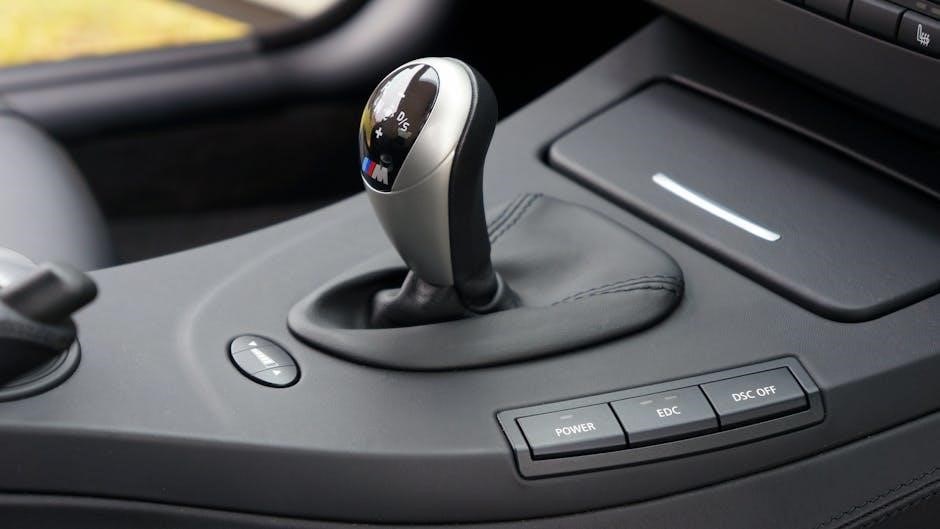
Drivers select gears via steering wheel-mounted paddles or the center console lever․ The DME (Digital Motor Electronics) manages shift timing and clutch operation, aiming for fast, smooth gear changes․ It’s a sophisticated, yet often finicky, setup․
Common SMG Issues & Reliability Concerns
SMG transmissions, while innovative, are prone to several issues․ Hydraulic leaks within the clutch actuator are frequent, leading to inconsistent clutch engagement or complete failure․ Pump failures also occur, impacting shift quality․
Sensor malfunctions and software glitches can cause erratic shifting or refusal to shift at all․ Repairing these systems can be costly, and finding qualified technicians is challenging, driving many owners towards manual conversions․
Parts List: Everything You’ll Need
A complete conversion requires a comprehensive parts list․ This includes a 6-speed manual gearbox, a performance clutch kit (disc, pressure plate, throw-out bearing), a lightweight flywheel, and a pedal assembly․
You’ll also need a shift linkage, a new transmission tunnel reinforcement plate, a clutch master cylinder, a hydraulic line, and DME/DSC coding cables․ Don’t forget hardware like bolts, fluids, and potentially a new exhaust heat shield․
Core Mechanical Components (Gearbox, Clutch, Flywheel)
The gearbox itself is the heart of the swap; a used, but well-maintained, 6-speed from a manual E46 M3 is ideal․ Pair this with a robust clutch kit – Sachs, SPEC, or similar – designed for performance․
A lightweight flywheel improves engine responsiveness and rev matching․ Ensure compatibility with your chosen clutch․ Inspect all components thoroughly for wear before installation; quality parts are crucial for reliability․
Supporting Components (Pedals, Shift Linkage, Wiring Harness)
Beyond the core mechanics, sourcing the correct supporting components is vital․ You’ll need a complete manual pedal box, including clutch and brake pedals․ The shift linkage – selector rod, bushings, and console components – must be from a manual M3․
The wiring harness requires modification; SMG-specific wires need to be removed or repurposed․ A harness adapter simplifies this process, or careful splicing is required for a clean installation․
Software & Coding Requirements (DME, DSC)
Post-installation, the car’s computer systems require significant coding adjustments․ The DME (Engine Control Unit) must be coded to recognize the manual transmission, disabling SMG-related functions and enabling appropriate engine maps․

Similarly, the DSC (Dynamic Stability Control) needs coding to correctly interpret wheel speed and throttle inputs from the manual gearbox․ Incorrect coding can lead to warning lights or malfunctioning systems; specialized BMW coding software is essential․
Tools Required: Preparing for the Conversion
A successful SMG to manual conversion demands a well-equipped workspace․ Beyond standard garage tools, specific items are crucial․ You’ll need a comprehensive socket set, various wrenches, and a calibrated torque wrench for precise tightening․
Essential specialized tools include a clutch alignment tool, a flywheel holding tool, and potentially an E46-specific diagnostic scanner for coding․ A floor jack, jack stands, and wheel chocks are vital for safe vehicle support․
Essential Garage Tools (Sockets, Wrenches, Torque Wrench)
A robust socket set, covering both metric and standard sizes, is paramount․ Invest in both shallow and deep sockets, alongside extensions and universal joints for accessing difficult bolts․ Wrenches, including combination, flare nut, and adjustable types, are equally vital․
Crucially, a high-quality torque wrench is non-negotiable, ensuring proper fastener tightening to BMW specifications․ Different torque ranges may be needed, so consider multiple wrenches or an adjustable type․
Specialized Tools (Clutch Alignment Tool, Flywheel Holder)
Beyond standard garage equipment, specific tools are essential for a successful conversion․ A clutch alignment tool is critical for centering the clutch disc during installation, preventing issues with gear engagement․ A flywheel holder secures the flywheel, allowing for safe torque application of the clutch;
Furthermore, a universal flywheel locking tool can be incredibly helpful․ Consider a gearbox jack for safe handling and positioning of the transmission itself, minimizing risk of damage or injury․
Removal of the SMG System: Step-by-Step Guide
Begin by disconnecting the negative battery terminal․ Drain the gearbox oil, then carefully disconnect all hydraulic lines from the SMG pump and actuators, containing any fluid spillage․ Next, detach the SMG control module and wiring harness, labeling connections meticulously․
Proceed to unbolt the driveshaft and exhaust system to create space․ Support the engine and carefully remove the SMG gearbox, preparing for the manual transmission installation․
Disconnecting Hydraulics & Electronics

Start by relieving pressure in the hydraulic system – a crucial safety step․ Carefully disconnect the hydraulic lines at the SMG pump, slave cylinder, and any associated sensors, using flare nut wrenches to prevent damage․ Cap the lines immediately to avoid contamination․
Then, disconnect the SMG control module, noting connector positions․ Unplug all wiring harness connections related to the SMG, labeling each one for re-identification during coding․
Removing the SMG Gearbox
With the driveshaft detached and all connections severed, support the engine from above using an engine support bar or jack with a wooden block․ Remove the exhaust system for clearance․ Disconnect the shift linkage and any remaining brackets․
Carefully lower the transmission jack, guiding the SMG gearbox downwards and backwards, ensuring it clears all components․ This process requires patience and attention to avoid damaging surrounding parts․
Installation of the Manual Gearbox: The Core Process
Installation of the Manual Gearbox
Position the manual gearbox on the transmission jack, ensuring it’s securely mounted․ Carefully raise the gearbox, aligning the input shaft with the clutch disc․ Gently guide the gearbox into place, avoiding any forceful movements that could damage the clutch or pilot bearing․
Once aligned, slowly raise the gearbox until it mates fully with the engine․ Securely bolt the gearbox to the engine block, following the manufacturer’s torque specifications․
Installing the Clutch & Flywheel
Begin by thoroughly cleaning the flywheel surface․ Install the flywheel, ensuring proper orientation, and torque the bolts to the specified value using a torque wrench․ Next, install the clutch disc, carefully centering it with a clutch alignment tool․
Then, install the pressure plate, again ensuring correct orientation, and torque the bolts in a star pattern to the manufacturer’s specifications․ Remove the clutch alignment tool before proceeding․
Mounting the Manual Gearbox
Carefully align the manual gearbox with the engine, ensuring the input shaft smoothly engages with the clutch disc․ Support the gearbox’s weight with a transmission jack to prevent damage during installation․
Slowly raise the gearbox into position and begin bolting it to the engine․ Torque the bolts in a star pattern to the manufacturer’s specifications․ Double-check all connections and ensure the gearbox is securely mounted before proceeding․
Pedal Box & Shift Linkage Installation
With the SMG gearbox removed, installing the manual pedal box is crucial․ Ensure proper alignment and secure mounting, as this forms the foundation for manual operation․
Next, install the shift linkage, connecting it to the gearbox․ Precise adjustment is vital for accurate gear selection․ Verify smooth and positive engagement in all gears before proceeding further․ A misaligned linkage will cause shifting issues․
Installing the Clutch Pedal
The clutch pedal installation requires careful attention to detail․ Begin by mounting the pedal assembly securely within the pedal box, ensuring it doesn’t interfere with the brake pedal’s travel․
Connect the clutch master cylinder to the pedal, bleeding the hydraulic line thoroughly to eliminate air bubbles․ Proper bleeding is essential for a firm and responsive clutch feel․ Double-check all connections for leaks before moving on․
Installing the Brake Pedal (if necessary)
Depending on your SMG setup, the brake pedal might require adjustment or replacement to ensure proper functionality with the manual conversion․ Verify the pedal’s height and position relative to the clutch pedal․
If replacement is needed, install the new brake pedal assembly, securing it firmly to the pedal box․ Confirm full travel and smooth operation, checking for any obstructions․ A properly positioned brake pedal is crucial for safety․
Connecting the Shift Linkage
Carefully install the shift linkage, ensuring all connection points are properly aligned and secured․ This involves attaching the selector rod to the transmission and connecting it to the shift lever in the cabin․
Verify smooth and precise gear selection throughout the entire range․ Adjust the linkage if necessary to eliminate any binding or looseness․ Proper linkage adjustment is vital for a satisfying and accurate shifting experience․
Wiring Harness Modifications & Coding
The SMG system utilizes a unique wiring harness; modifications are crucial for manual compatibility․ Remove SMG-specific wires and integrate those required for the manual transmission, like the reverse light switch․
Coding the DME (Engine Control Module) and DSC (Dynamic Stability Control) is essential․ This tells the car it’s now a manual, disabling SMG functions and enabling proper operation of the new setup․ Specialized software is needed․
DME Coding for Manual Transmission
DME coding is paramount for a successful conversion․ You must disable all SMG-related parameters and activate the manual transmission profile within the DME․ This involves using specialized BMW coding software, like INPA or ISTA․
Incorrect coding can lead to various issues, including warning lights, limp mode, or incorrect engine behavior․ Ensure the correct coding sequence is followed precisely, referencing reliable guides and forums․
DSC Coding Adjustments
The Dynamic Stability Control (DSC) module requires coding adjustments to recognize the manual transmission․ Failing to do so can result in the DSC system malfunctioning or displaying error messages․ Specifically, the DSC needs to be informed that it’s no longer interfacing with an SMG gearbox․
Coding involves modifying parameters related to wheel speed sensors and transmission input, ensuring proper ABS and DSC functionality with the new manual setup․ Use appropriate BMW coding tools․
Final Connections & Fluid Fill-Up
With the mechanical installation complete, reconnect the driveshaft to the manual gearbox, ensuring proper alignment and torque specifications․ Reinstall the exhaust system, verifying all mounting points are secure․ Next, carefully fill the gearbox with the correct BMW-specified gear oil, checking for leaks․
Subsequently, bleed the hydraulic clutch system thoroughly to eliminate air bubbles, guaranteeing smooth clutch engagement․ Double-check all electrical connections and fluid levels before proceeding to testing․
Connecting the Driveshaft & Exhaust

Carefully align and connect the driveshaft to the newly installed manual gearbox, utilizing new bolts and ensuring they are torqued to the manufacturer’s specifications․ Pay close attention to the centering of the driveshaft to prevent vibrations;
Then, reinstall the exhaust system, checking for proper fitment and securing all hangers and connections․ Verify there are no leaks or obstructions before proceeding; a properly fitted exhaust is crucial․
Filling Gearbox & Hydraulic Clutch System
Begin by slowly filling the manual gearbox with the correct BMW-specified gear oil, checking the level with the fill plug while the car is level․ Next, bleed the hydraulic clutch system thoroughly to remove any air bubbles, ensuring a firm pedal feel․
Proper fluid levels are critical for smooth operation and longevity; repeat the bleeding process until only clear fluid emerges․ Double-check all connections for leaks before moving forward․
Testing & Troubleshooting: Ensuring a Smooth Shift
After completing the conversion, start the engine and carefully test all gears, listening for unusual noises․ Check for clutch engagement smoothness and proper shift linkage operation․
Troubleshoot any issues like grinding gears or a soft pedal by re-bleeding the clutch or inspecting linkage adjustments․ A diagnostic scan can reveal coding errors needing correction for optimal performance․

Potential Issues & Solutions During Conversion
Expect challenges like stubborn SMG bolts, requiring penetrating oil and patience․ Incorrect coding can cause transmission or DSC warnings – verify all coding with a BMW specialist․
Clutch alignment issues may lead to shifting difficulties; double-check alignment tool usage․ Stripped threads during pedal box installation can be repaired with Helicoils․ Thorough preparation minimizes surprises!
Cost Breakdown: Budgeting for the Swap
Budget approximately $2,000 ─ $4,000 for parts, including the gearbox, clutch, flywheel, pedals, and shift linkage․ Coding and potential diagnostic fees add $300 ⎼ $600․
Labor costs, if outsourced, can range from $1,500 to $3,000, depending on shop rates․ Unexpected expenses, like broken bolts or additional wiring, should be factored in – allocate an extra $200-$500 as contingency․
Resources & Support: Where to Find Help
Online forums, such as M3Forum․net and E46Fanatics, are invaluable for guidance and shared experiences․ BMW-specific Facebook groups offer real-time support․
Coding specialists can assist with DME and DSC adjustments; search online for BMW coding services․ Local BMW mechanics experienced with E46s can provide assistance, and parts suppliers often offer technical support․

Long-Term Maintenance: Keeping Your Manual M3 Running
Regularly inspect the clutch for wear and ensure proper hydraulic clutch fluid levels․ Transmission fluid changes, following BMW’s recommended intervals, are crucial․
Periodically check shift linkage components for looseness and lubricate as needed․ Inspect driveshaft couplings for wear․ Address any unusual noises or vibrations promptly to prevent further damage and maintain driving enjoyment․
Enjoying the Manual Experience
The conversion to a manual gearbox revitalizes the E46 M3, delivering a purer, more connected driving experience․ Feel the control, enjoy the precise shifts, and rediscover the joy of heel-toe downshifting․
This modification isn’t just about changing gears; it’s about enhancing the soul of the car, making it truly your own․ Embrace the rewarding experience of a driver-focused machine!