Justice: What’s the Right Thing to Do? ‒ Article Plan
Michael Sandel’s “Justice: What’s the Right Thing to Do?” delves into pivotal moral and political philosophies, examining utilitarianism, libertarianism, and Kantian ethics.
The book, based on Sandel’s Harvard course, explores defining justice, questioning legal versus moral correctness, and prompting readers to consider ethical decision-making.
Resources like the Osgoode Hall Law Journal offer notes on the text, while discussions highlight Sandel’s influence on contemporary thought regarding fairness and rights.
Michael Sandel’s “Justice: What’s the Right Thing to Do?” has become a cornerstone in contemporary political philosophy, sparking widespread debate and influencing discussions far beyond academic circles. Published in 2009, the book originates from Sandel’s renowned undergraduate course at Harvard University, where he challenges students to grapple with complex moral dilemmas and fundamental questions of fairness, rights, and the common good.

The core appeal of “Justice” lies in its accessibility. Sandel eschews dense philosophical jargon, instead employing real-world case studies – from the trolley problem to affirmative action, and even debates surrounding same-sex marriage – to illustrate abstract concepts. This approach makes challenging ethical theories, such as utilitarianism, libertarianism, and Kantian ethics, relatable and engaging for a broad audience.
The book isn’t simply a survey of philosophical thought; it’s an invitation to participate in a continuous process of moral reasoning. Sandel doesn’t offer easy answers, but rather encourages readers to critically examine their own beliefs and assumptions about what constitutes a just society. The text’s enduring relevance is evidenced by its continued use in educational settings and its frequent citation in political and legal discourse, as highlighted by resources like the Osgoode Hall Law Journal.
The Core Question: Defining Justice
At the heart of Michael Sandel’s “Justice: What’s the Right Thing to Do?” lies a deceptively simple, yet profoundly challenging question: what does it mean to define justice? Sandel immediately demonstrates the elusiveness of a singular definition, presenting scenarios that expose conflicting intuitions about fairness and the right course of action.
He argues that justice isn’t merely a matter of following legal procedures, but rather a deeper inquiry into moral and ethical principles. This distinction is crucial, as legality and morality often diverge. The book explores whether justice is about maximizing overall happiness (utilitarianism), protecting individual rights and entitlements (libertarianism), or upholding universal moral duties (Kantian ethics).
Sandel emphasizes that these approaches aren’t mutually exclusive, but each carries inherent limitations and potential injustices. He challenges readers to consider whether a just society prioritizes efficiency, liberty, or equality, and to grapple with the trade-offs involved in each choice. Ultimately, “Justice” frames the pursuit of a just society not as a search for a definitive answer, but as an ongoing, critical conversation.

Utilitarianism and the Greatest Happiness Principle
Michael Sandel introduces utilitarianism as a moral framework centered on maximizing overall happiness and well-being. Rooted in the work of Jeremy Bentham and John Stuart Mill, this principle dictates that the “right” action is the one that produces the greatest good for the greatest number of people. Sandel meticulously explains how utilitarian calculations attempt to weigh the benefits and burdens of different choices, aiming for the outcome that yields the highest net happiness.
However, he quickly highlights the complexities and potential pitfalls of this approach. Utilitarianism can justify sacrificing the interests of a minority for the benefit of the majority, raising concerns about individual rights and fairness. Sandel presents thought experiments, illustrating how a strict adherence to the greatest happiness principle can lead to counterintuitive and morally questionable results.
The book explores the challenges of accurately measuring happiness and comparing the well-being of different individuals. It questions whether all forms of happiness are equally valuable and whether utilitarianism adequately accounts for considerations like justice, rights, and desert.
The Case Against Utilitarianism
Michael Sandel builds a compelling case against the unreserved application of utilitarianism, demonstrating its potential to violate fundamental principles of justice and individual rights. He presents scenarios where maximizing overall happiness leads to outcomes that many would consider deeply unfair or morally reprehensible. These examples challenge the notion that consequences alone determine the morality of an action.
A key critique centers on utilitarianism’s disregard for individual rights. The principle allows for the sacrifice of innocent individuals if doing so benefits a larger group, raising concerns about the protection of minority interests. Sandel explores how this can lead to tyranny of the majority, where the rights of the few are trampled upon for the sake of the many.
Furthermore, the book questions the feasibility of accurately calculating and comparing happiness across individuals. It highlights the subjective nature of well-being and the difficulties in objectively determining what constitutes the “greatest good.” Sandel argues that utilitarianism overlooks the intrinsic value of moral principles and the importance of treating individuals with respect, regardless of the consequences.

Libertarianism: Rights, Entitlements, and Distributive Justice
Michael Sandel introduces libertarianism as a philosophy prioritizing individual liberty and minimal government intervention. Central to this perspective is the idea of self-ownership – the belief that individuals have absolute rights over their bodies, labor, and legitimately acquired property. This foundation shapes their view of distributive justice, emphasizing entitlement based on free choices and market transactions.

Libertarians advocate for a system where wealth distribution isn’t a matter of justice, but rather a consequence of individual effort and voluntary exchange. Any attempt to redistribute wealth through taxation or social programs is seen as a violation of individual rights, akin to forced labor. They champion a free market as the most efficient and just mechanism for allocating resources.
Sandel explains that this philosophy, heavily influenced by thinkers like Robert Nozick, focuses on procedural justice – ensuring fair processes – rather than outcome-based justice. The legitimacy of holdings depends on how they were initially acquired and transferred, not on whether the resulting distribution is equal or beneficial to society as a whole.
Robert Nozick’s Minimal State
Robert Nozick, a prominent figure in libertarian thought, articulated the concept of the “minimal state” in his work, heavily discussed by Michael Sandel in “Justice: What’s the Right Thing to Do?”. This state’s role is strictly limited to protecting individual rights against force, theft, fraud, and breach of contract. It functions primarily to enforce laws, maintain order, and provide a legal framework for voluntary interactions.
Nozick argues that any state intervention beyond these core functions constitutes an infringement upon individual liberty. Taxation for redistributive purposes, for example, is viewed as a violation of self-ownership, essentially treating individuals as means to others’ ends. The minimal state doesn’t aim to promote specific social outcomes or achieve equality; its sole purpose is to uphold individual rights.
Sandel explains that Nozick’s vision emphasizes procedural justice over distributive justice. As long as the initial acquisition of holdings and subsequent transfers are just, the resulting distribution – however unequal – is considered legitimate. This framework prioritizes individual freedom and responsibility above all else, minimizing the state’s role in shaping societal outcomes.
Critiques of Libertarianism and the Role of Equality
Michael Sandel, in “Justice: What’s the Right Thing to Do?”, presents several critiques of Robert Nozick’s libertarianism, particularly concerning its implications for equality. A central objection revolves around the potential for extreme inequalities to arise from a purely procedural justice system, where just acquisition and transfer are prioritized over outcome.
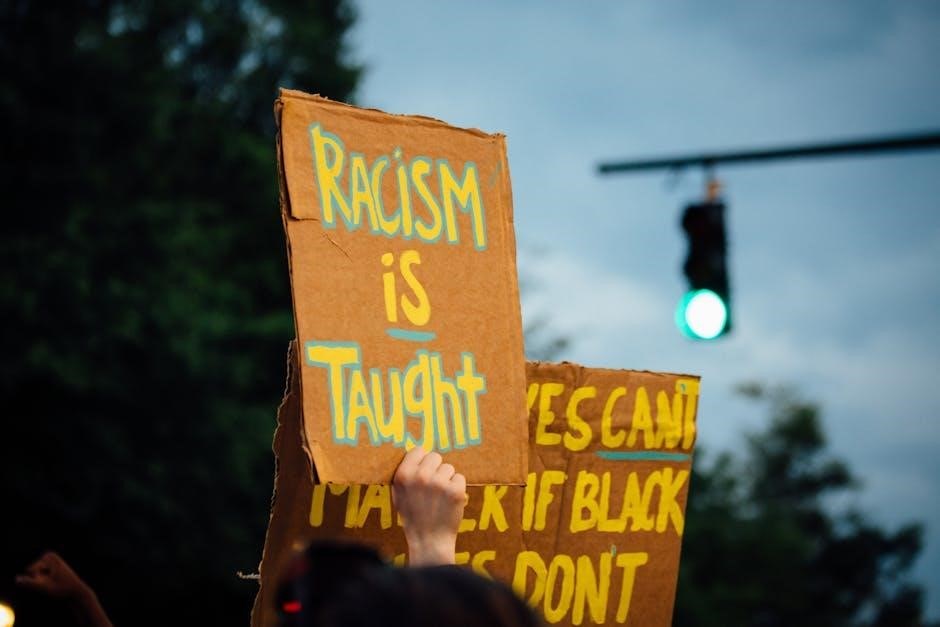
Critics argue that historical injustices – such as slavery or colonial exploitation – can create deeply entrenched disadvantages that a minimal state, focused solely on protecting current property rights, fails to address. This can lead to a perpetuation of systemic inequalities, rendering equal opportunity meaningless for many.

Furthermore, Sandel highlights the concern that a strict emphasis on individual rights may neglect the importance of social solidarity and collective responsibility. The libertarian framework, by minimizing state intervention, may undermine the ability to provide essential services and support for those in need, raising questions about the moral obligations of a just society. The debate centers on whether a just society must actively strive for a more equitable distribution of resources, even if it requires some limitation on individual liberty.

Kantian Ethics: Duty and Moral Law

Immanuel Kant’s ethical theory, as explored by Michael Sandel in “Justice: What’s the Right Thing to Do?”, centers on the concept of duty and adherence to a universal moral law. Unlike utilitarianism, which focuses on consequences, Kantian ethics emphasizes the intention behind actions and their conformity to rational principles.
Central to Kant’s philosophy is the idea that moral actions are those performed out of a sense of duty, motivated by respect for the moral law itself, rather than by inclination or self-interest. This moral law is discovered through reason and dictates what we ought to do, regardless of our desires or potential outcomes.
Sandel explains how Kant believed morality requires us to act in ways we would want everyone else to act, establishing universalizable principles. This framework rejects treating individuals merely as means to an end, emphasizing inherent human dignity and the importance of respecting each person’s autonomy. Kantian ethics provides a strong foundation for rights-based reasoning and challenges consequentialist approaches to justice.
Categorical Imperative and Universalizability
Michael Sandel, in “Justice: What’s the Right Thing to Do?”, elucidates Immanuel Kant’s cornerstone concept: the Categorical Imperative. This isn’t a conditional rule, but a command demanding moral action regardless of personal desires or consequences – a duty we have simply by being rational beings.
The Categorical Imperative manifests in several formulations, most notably the Principle of Universalizability. This principle dictates that before acting, we must ask if the maxim (the underlying principle) of our action could become a universal law applicable to everyone. If it leads to a logical contradiction or a world we wouldn’t want to live in, the action is morally impermissible.
Sandel illustrates this with examples, demonstrating how lying, even to save a life, fails the test of universalizability. If everyone lied, trust would erode, rendering lying ineffective. This highlights Kant’s emphasis on consistency and rationality in moral reasoning. Universalizability ensures moral principles are impartial and apply equally to all, forming the bedrock of Kantian ethics.
John Rawls and Justice as Fairness
John Rawls, a central figure in Michael Sandel’s “Justice: What’s the Right Thing to Do?”, proposes a theory of “Justice as Fairness” aiming to establish principles for a just society. Rawls’s thought experiment involves imagining a “Veil of Ignorance,” where individuals deciding on societal rules are unaware of their future position – their wealth, status, or even natural abilities.
This veil compels impartiality, as rational actors would choose principles protecting the least advantaged, fearing they themselves might occupy that position. Rawls argues this process yields two primary principles: equal basic liberties for all, and the Difference Principle.
The Difference Principle permits social and economic inequalities only if they benefit the least well-off. This isn’t about equality of outcome, but ensuring any disparities improve the situation of those at the bottom. Sandel explores how Rawls’s framework challenges traditional notions of meritocracy and distributive justice, offering a compelling vision of fairness in a complex world.
The Veil of Ignorance and Principles of Justice
Central to John Rawls’s theory, as explored in Michael Sandel’s “Justice: What’s the Right Thing to Do?”, is the concept of the “Veil of Ignorance.” This is a hypothetical scenario designed to foster impartiality when determining principles of justice for society. Individuals, stripped of knowledge about their personal characteristics – social status, wealth, abilities, or even their conceptions of the good life – must choose the rules governing their future world.
Rawls argues that under these conditions, rational individuals would prioritize protecting their worst-case scenario. This leads to the selection of principles guaranteeing equal basic liberties for all citizens, ensuring fundamental rights are universally protected. Furthermore, it justifies the Difference Principle, allowing inequalities only if they ultimately benefit the least advantaged members of society.
The Veil of Ignorance, therefore, isn’t merely a thought experiment; it’s a powerful tool for evaluating the fairness of existing social arrangements and envisioning a more just future, as Sandel meticulously demonstrates.
Difference Principle and Social Inequality
John Rawls’s Difference Principle, a cornerstone of his “Justice as Fairness” theory – thoroughly examined by Michael Sandel in “Justice: What’s the Right Thing to Do?” – addresses the complex issue of social and economic inequalities. It asserts that disparities in wealth and income are permissible only if they ultimately benefit the least advantaged members of society.
This isn’t a justification for complete equality, but rather a constraint on inequality. It doesn’t demand equal outcomes, but requires that any existing inequalities contribute to improving the position of those at the bottom. For example, incentivizing skilled workers with higher pay is acceptable if it leads to economic growth that also benefits the poor through job creation or social programs.
Sandel highlights how this principle challenges traditional notions of meritocracy, suggesting that luck and circumstance play a significant role in individual success, and that society has a responsibility to mitigate the disadvantages faced by others. It’s a nuanced approach to balancing individual liberty with social justice.
Moral Dilemmas and Real-World Applications

Michael Sandel’s “Justice: What’s the Right Thing to Do?” doesn’t confine itself to abstract philosophical concepts; it actively engages with challenging moral dilemmas and their practical implications. The book presents numerous case studies – from the trolley problem to debates surrounding affirmative action and same-sex marriage – forcing readers to grapple with conflicting values and justify their reasoning.
These scenarios aren’t merely thought experiments. Sandel demonstrates how the principles of utilitarianism, libertarianism, and Kantian ethics play out in real-world contexts, influencing legal decisions, political debates, and everyday moral judgments. He encourages a critical examination of our intuitions and assumptions about what constitutes a just society.
The text explores how differing philosophical frameworks lead to vastly different conclusions on issues like wealth distribution, individual rights, and the role of government. By applying these theories to concrete situations, Sandel illuminates the complexities of ethical decision-making and the importance of reasoned deliberation.
Justice in Political Debate: Current Examples
Michael Sandel’s framework, presented in “Justice: What’s the Right Thing to Do?”, remains strikingly relevant to contemporary political debates. Discussions surrounding economic inequality, healthcare access, and immigration policy frequently echo the core tensions explored in the book – particularly the clashes between utilitarian efficiency and individual rights.
For instance, debates about wealth taxation directly confront questions of distributive justice, mirroring the arguments between Rawls and Nozick. Similarly, controversies over affirmative action policies raise fundamental issues about fairness, equality of opportunity, and the historical redress of past injustices.
Even current events, like discussions around pandemic responses and resource allocation, can be analyzed through the lens of Sandel’s ethical frameworks. The book encourages us to move beyond simplistic ideological positions and engage in a more nuanced consideration of the moral principles at stake. President Lee Jaemyung’s meeting with Sandel highlights the book’s ongoing influence on political thought.
Sandel’s Influence on Contemporary Thought
Michael Sandel’s “Justice: What’s the Right Thing to Do?” has profoundly impacted contemporary ethical and political discourse, extending far beyond academic circles. The book’s accessibility and real-world examples have made complex philosophical concepts relatable to a broad audience, fostering more informed public debate.
Its influence is evident in legal scholarship, with analyses like those published in the Osgoode Hall Law Journal demonstrating the book’s value as a foundational text. Sandel’s emphasis on moral reasoning, rather than purely legalistic interpretations, encourages a more holistic approach to justice.
Furthermore, the book’s exploration of competing ethical frameworks – utilitarianism, libertarianism, Kantianism, and Rawlsian justice – provides a valuable toolkit for navigating the moral complexities of modern life. The meeting between President Lee Jaemyung and Sandel underscores the book’s relevance to current political leaders seeking ethical guidance. It continues to shape discussions on fairness and the common good.
The Ongoing Pursuit of Justice
Michael Sandel’s “Justice: What’s the Right Thing to Do?” doesn’t offer definitive answers, but rather equips readers with the critical tools to engage in the perpetual pursuit of justice. The book emphasizes that ethical dilemmas rarely have simple solutions, demanding careful consideration of competing moral claims.
Sandel demonstrates that grappling with these complexities is not merely an academic exercise, but a fundamental aspect of responsible citizenship. His work encourages us to move beyond individual rights and entitlements, and to consider the common good and the virtues that underpin a just society.
The enduring relevance of the text, as evidenced by ongoing discussions and its impact on political thought, highlights the timeless nature of these questions. Ultimately, “Justice” serves as a powerful reminder that the quest for what is right is an ongoing process, requiring continuous reflection, debate, and a commitment to moral reasoning. It’s a call to action, not a final verdict.