
Understanding Deep Well Manual Water Pumps
Deep well manual water pumps offer a reliable‚ off-grid solution for accessing groundwater‚ providing a sustainable water source without electricity․
What is a Deep Well Manual Water Pump?
A deep well manual water pump is a mechanical device designed to lift water from a significant depth below the ground surface – typically exceeding 25 feet‚ and often much deeper․ Unlike shallow well pumps‚ these systems are engineered to overcome the increased pressure and suction challenges associated with greater depths․
These pumps operate using human power‚ employing a hand lever mechanism to create a reciprocating motion․ This motion drives a piston or diaphragm within the pump cylinder‚ drawing water up through a drop pipe․ They are a robust and independent alternative to electric submersible pumps‚ ideal for locations lacking electricity or requiring a backup water source․
Essentially‚ it’s a self-contained system providing access to potable water through physical effort․
Why Choose a Manual Pump for Deep Wells?
Opting for a manual pump for deep wells presents several compelling advantages․ Primarily‚ they offer independence from the electrical grid‚ crucial for remote locations or during power outages․ This reliability translates to a consistent water supply‚ unaffected by external factors․
Furthermore‚ manual pumps require minimal maintenance and have a long operational lifespan due to their simple mechanical design․ They are also cost-effective‚ eliminating ongoing electricity bills and reducing reliance on potentially expensive repairs associated with electric pumps․
Finally‚ these pumps are environmentally friendly‚ producing zero emissions and promoting sustainable water access․ They represent a resilient and responsible choice for deep well water extraction․

Types of Deep Well Manual Water Pumps
Several designs exist for manual deep well pumps‚ each with unique strengths; piston‚ diaphragm‚ and peristaltic pumps are commonly utilized for water extraction․
Piston Pumps: The Traditional Choice
Piston pumps represent the oldest and most widely recognized type of manual deep well pump․ Their operation is straightforward: a piston moves up and down within a cylinder‚ creating suction to draw water from the well․
This reciprocating motion‚ powered by a hand lever‚ forces water upwards through a drop pipe․ Known for their durability and ability to handle significant depths‚ piston pumps are often constructed from robust materials like cast iron and steel․
They excel in situations requiring high lift and can be relatively easy to repair in the field with basic tools․ However‚ they typically deliver water at a slower rate compared to some other pump types‚ and require consistent manual effort for operation․
Diaphragm Pumps: Versatility and Reliability
Diaphragm pumps utilize a flexible diaphragm‚ typically made of rubber or plastic‚ that moves back and forth to create pumping action․ This movement generates alternating vacuum and pressure within the pump chamber‚ drawing water in and expelling it out․
They are valued for their ability to handle water containing sediment or small particles without damage‚ making them suitable for wells with less-than-ideal water quality․
Diaphragm pumps are also self-priming‚ simplifying initial setup․ While generally offering a moderate flow rate‚ they are known for their reliability and relatively low maintenance requirements․ Their versatility extends to being able to run dry without causing significant harm to the pump mechanism․
Peristaltic Pumps: Gentle and Precise
Peristaltic pumps operate by squeezing a flexible tube with rollers‚ creating a vacuum that draws fluid into the tube and then pushes it forward․ This method ensures the water only contacts the tube’s interior‚ preventing contamination and making them ideal for sensitive applications․
While less common for traditional deep well setups due to lower flow rates compared to piston or diaphragm pumps‚ they excel in situations requiring precise water delivery or handling of delicate fluids․
They are particularly useful when maintaining water purity is paramount․ Manual versions exist‚ though often smaller in scale‚ and require consistent‚ deliberate operation to maintain flow․ Their gentle action minimizes shear stress on the water․

Key Components of a Deep Well Manual Pump System
Essential parts include the pump itself‚ drop pipe‚ foot valve‚ hand lever‚ connecting rod‚ and the well casing – all working together for water access․
The Pump Cylinder & Piston/Diaphragm
The cylinder forms the heart of the pump‚ providing the chamber where water is drawn up from the well․ Within this cylinder‚ either a piston or a diaphragm operates to create the necessary suction and pressure․
Pistons move linearly‚ creating a vacuum to pull water in and then pushing it upwards․ They typically feature leather or rubber cups for a tight seal․ Diaphragms‚ conversely‚ are flexible membranes that flex to create the pumping action‚ offering a self-priming capability and handling sediment better․
The cylinder material is crucial; cast iron and stainless steel are common choices for durability and corrosion resistance․ The precise fit between the piston/diaphragm and the cylinder wall is paramount for efficient operation and preventing leaks‚ ensuring a consistent water supply․
Drop Pipe & Foot Valve
The drop pipe is the conduit extending from the pump cylinder down into the well‚ delivering water from the source․ Constructed typically from PVC or galvanized steel‚ its diameter must match the pump’s inlet for optimal flow․ Length is determined by the well’s depth plus an allowance for pump placement․
Crucially‚ a foot valve is attached to the bottom of the drop pipe․ This one-way valve prevents water from draining back down the pipe when the pump isn’t actively drawing water‚ maintaining prime and reducing the need for frequent re-priming․
Foot valves incorporate a strainer to filter out sediment and debris‚ protecting the pump mechanism․ Regular inspection and cleaning of both the drop pipe and foot valve are essential for consistent performance and longevity․
Hand Lever & Connecting Rod
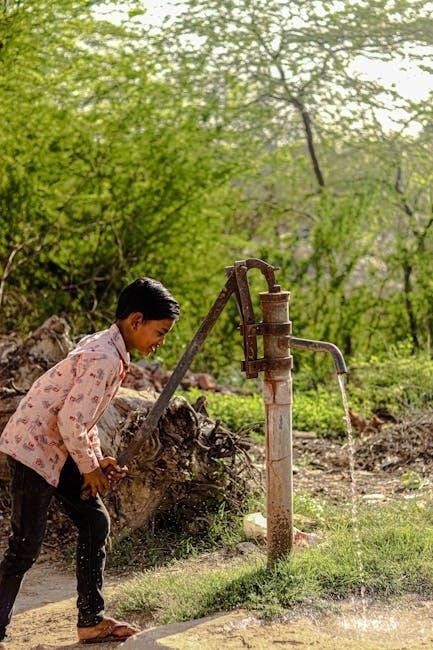
The hand lever is the primary interface for the user‚ translating manual force into the pumping action․ Ergonomic design and comfortable grip are vital for efficient operation‚ especially during prolonged use․ Lever length influences the mechanical advantage – longer levers require less force but more travel․
A connecting rod links the hand lever to the pump’s piston or diaphragm․ This robust component transmits the reciprocating motion‚ driving the pumping cycle․ It must be securely fastened at both ends to prevent slippage or disconnection․
Material selection for both the lever and connecting rod is critical; durable metals like steel are common․ Regular inspection for wear‚ corrosion‚ or looseness is essential to maintain pump functionality and prevent breakdowns․ Proper lubrication also extends component life․
Well Casing & Seal
The well casing is the structural lining of the well bore‚ preventing collapse and maintaining the integrity of the water source․ Typically constructed from steel or PVC‚ it isolates the well from surrounding soil and potential contaminants․
A well seal‚ installed at the top of the casing‚ is crucial for preventing surface water‚ debris‚ and pollutants from entering the well․ This seal creates a watertight barrier‚ safeguarding water quality and protecting the pump system․
Proper casing and sealing are vital for long-term well health․ The casing depth should extend below the static water level‚ and the seal must be intact and properly maintained․ Regular inspections are recommended to identify any cracks or deterioration‚ ensuring a safe and reliable water supply․

Installation Considerations for Deep Well Manual Pumps
Successful installation demands careful assessment of well characteristics and pump specifications to ensure optimal performance and longevity of the system․
Assessing Well Depth & Water Level
Accurate measurement of your well’s depth is paramount before selecting a manual pump․ This dictates the maximum pumping lift the pump must overcome․ Utilize a weighted tape measure or employ a professional well assessment service for precise readings․
Equally crucial is determining the static water level – the water’s surface when undisturbed․ Lowering a weighted line until it touches water achieves this․ Subtract the static water level from the total well depth to calculate the draw-down․
Draw-down represents the distance the water level drops during pumping․ Knowing both depth and water level allows you to choose a pump capable of efficiently lifting water from your specific well conditions‚ preventing strain and ensuring reliable operation․ Consider seasonal fluctuations in water levels too!
Choosing the Right Pump Size
Selecting the appropriate pump size hinges on your daily water needs and the well’s characteristics․ Consider peak demand – the maximum water volume required at any given time‚ like for livestock or irrigation․
Pump capacity is typically measured in gallons per minute (GPM) or liters per minute (LPM)․ Match the pump’s GPM to your anticipated usage‚ factoring in the well’s recovery rate – how quickly it replenishes after water is drawn․
Pump lift‚ determined by well depth and water level‚ is critical․ Manual pumps have lift limitations; exceeding these drastically reduces efficiency․ A pump rated for a higher lift than needed is preferable to one that’s undersized․ Prioritize efficiency and longevity!
Proper Drop Pipe Selection & Installation
The drop pipe‚ extending from the pump to below the water level‚ is crucial for efficient operation․ Choose a pipe material compatible with your water quality – galvanized steel is common‚ but PVC or polyethylene may be suitable․ Ensure the diameter matches the pump’s inlet․
Proper installation prevents issues․ The pipe must be straight and free of kinks or obstructions․ Securely attach it to the pump and well casing‚ using appropriate clamps or supports․
Submerge the foot valve sufficiently below the lowest expected water level to prevent air intake․ A slight downward slope aids priming․ Avoid sharp bends‚ which restrict flow and increase wear․ Careful installation ensures reliable water delivery!
Operation & Maintenance of Deep Well Manual Pumps
Consistent operation and routine maintenance are vital for longevity; regular checks and lubrication ensure optimal performance and prevent costly repairs․

Priming the Pump
Priming a deep well manual pump is crucial‚ especially after installation or periods of inactivity‚ as it removes air from the pump cylinder and drop pipe․ Begin by slowly pouring water into the pump cylinder until it’s full‚ ensuring the hand lever is in the upward position․
Next‚ carefully operate the hand lever several times‚ observing if water is drawn up from the well․ If not‚ repeat the filling process․ A foot valve malfunction can hinder priming; verify its proper function․
Persistent priming issues might indicate leaks in the drop pipe or connections․ Patience is key; it may take several attempts to fully prime a deep well pump‚ particularly if the water level is low․ A properly primed pump will deliver a steady stream of water with each stroke․

Effective Pumping Techniques
Maximizing water output from your deep well manual pump requires consistent and deliberate technique․ Employ a smooth‚ full-stroke motion with the hand lever‚ avoiding jerky movements which reduce efficiency․ Maintain a steady rhythm; faster pumping doesn’t necessarily yield more water‚ but consistent effort does․
Listen to the pump – a consistent sound indicates proper operation․ If the pump begins to labor or the handle feels resistant‚ pause briefly to allow water levels to recover in the well․
Avoid over-pumping‚ especially during dry seasons‚ to prevent damage to the pump and depletion of the water source․ Regular‚ moderate pumping is far more sustainable than infrequent‚ forceful attempts․
Regular Inspection & Lubrication
Consistent maintenance is crucial for the longevity of your deep well manual pump․ Inspect all components – the cylinder‚ piston (or diaphragm)‚ connecting rod‚ and hand lever – monthly for signs of wear‚ corrosion‚ or damage․ Pay close attention to seals and gaskets‚ replacing them promptly if cracked or deteriorated․
Lubricate all moving parts regularly with a food-grade‚ non-toxic lubricant‚ following the manufacturer’s recommendations․ This reduces friction‚ prevents rust‚ and ensures smooth operation․
Check the drop pipe for kinks or obstructions․ A well-maintained pump delivers reliable water access for years‚ minimizing costly repairs and downtime․
Troubleshooting Common Issues
Addressing problems promptly ensures continued operation of your deep well manual pump; common issues include priming difficulties and reduced water flow rates․
Pump Not Priming
A pump failing to prime is a frequent issue with deep well manual pumps‚ often stemming from air leaks within the system․ Carefully inspect all connections – from the pump cylinder to the drop pipe and well casing – ensuring they are tightly sealed․
Check the foot valve at the bottom of the drop pipe; a worn or damaged foot valve won’t retain water‚ preventing prime․ Also‚ verify the drop pipe isn’t perforated‚ allowing air ingress․
Insufficient water in the well itself can also cause priming problems‚ especially after periods of drought or heavy usage․ Thoroughly prime the pump cylinder by slowly pouring water directly into it‚ then operate the handle to attempt drawing water․ Persistent issues may indicate a blockage within the drop pipe or a more significant leak requiring professional attention․
Reduced Water Flow
Experiencing diminished water flow from your deep well manual pump signals a potential obstruction or wear within the system․ Begin by inspecting the foot valve; sediment buildup or debris can restrict water intake․ A partially clogged drop pipe is another common culprit – consider flushing it with clean water to dislodge any blockages․
Examine the pump cylinder and piston/diaphragm for wear and tear․ Worn components reduce pumping efficiency․ Also‚ check for air leaks‚ as even small leaks can significantly impact flow rate․
Declining well yield‚ due to lowered water table levels‚ can also contribute to reduced flow․ If the issue persists after addressing these points‚ a professional well assessment might be necessary to diagnose underlying geological changes․
Handle Feels Stiff or Stuck
A stiff or stuck handle on your deep well manual pump usually indicates a mechanical issue requiring immediate attention․ The most frequent cause is a lack of lubrication within the pump cylinder or connecting rod joints․ Apply a suitable‚ water-resistant lubricant to these areas‚ working the handle to distribute it evenly․
Corrosion can also seize moving parts‚ especially if the pump hasn’t been used for an extended period․ Inspect for rust and carefully remove it‚ followed by lubrication․ A bent connecting rod or a damaged piston/diaphragm can physically obstruct movement․
Ensure nothing is obstructing the pump’s external mechanism․ If the problem persists‚ disassembly and inspection by someone experienced with pump repair is recommended․
Safety Precautions When Using Deep Well Manual Pumps
Prioritize safety by ensuring proper well sealing‚ preventing contamination‚ and understanding pump limitations to avoid damage or injury during operation․
Preventing Contamination
Maintaining water purity is paramount when utilizing a deep well manual pump․ Regularly inspect the well casing for cracks or damage‚ as these can allow surface contaminants like pesticides‚ fertilizers‚ and animal waste to enter the groundwater supply․
Ensure a proper well cap is always in place‚ creating a secure seal․ Avoid activities near the well that could introduce pollutants․ When performing maintenance on the pump system‚ always use clean tools and materials․
Consider a water testing kit to periodically assess water quality․ If the drop pipe or foot valve needs replacement‚ do so promptly to prevent corrosion products from affecting the water․ Proper hygiene practices‚ such as washing hands before handling pump components‚ are also crucial for preventing bacterial contamination․
Avoiding Pump Damage
Protecting your deep well manual pump from damage ensures its longevity and consistent performance․ Never over-pump the well‚ as this can lead to cavitation and wear on pump components․ Avoid applying excessive force to the hand lever‚ which could strain the connecting rod or cylinder․
During freezing temperatures‚ drain the pump and drop pipe to prevent ice expansion from cracking parts․ Regularly check the drop pipe for kinks or obstructions that could impede water flow and damage the foot valve․
Inspect the well casing for settling or instability‚ which could put stress on the pump installation․ Store the pump in a dry‚ sheltered location when not in use‚ protecting it from the elements․ Proper installation and mindful operation are key to preventing costly repairs․
Emergency Procedures
In an emergency‚ knowing how to respond can minimize damage and ensure continued access to water․ If the pump suddenly stops working‚ immediately cease operation to avoid further strain․ Check for obvious obstructions in the drop pipe or foot valve․
If you suspect a well casing issue (e․g․‚ collapse)‚ stop using the pump and consult a well professional․ In the event of a broken connecting rod or hand lever‚ do not attempt a field repair without proper knowledge and tools․
Have a backup water source available for emergencies‚ such as stored water or a secondary well․ Familiarize yourself with local well repair services and keep their contact information readily accessible․ Prioritize safety and professional assistance when dealing with significant pump failures․